


Wildlife Tracks
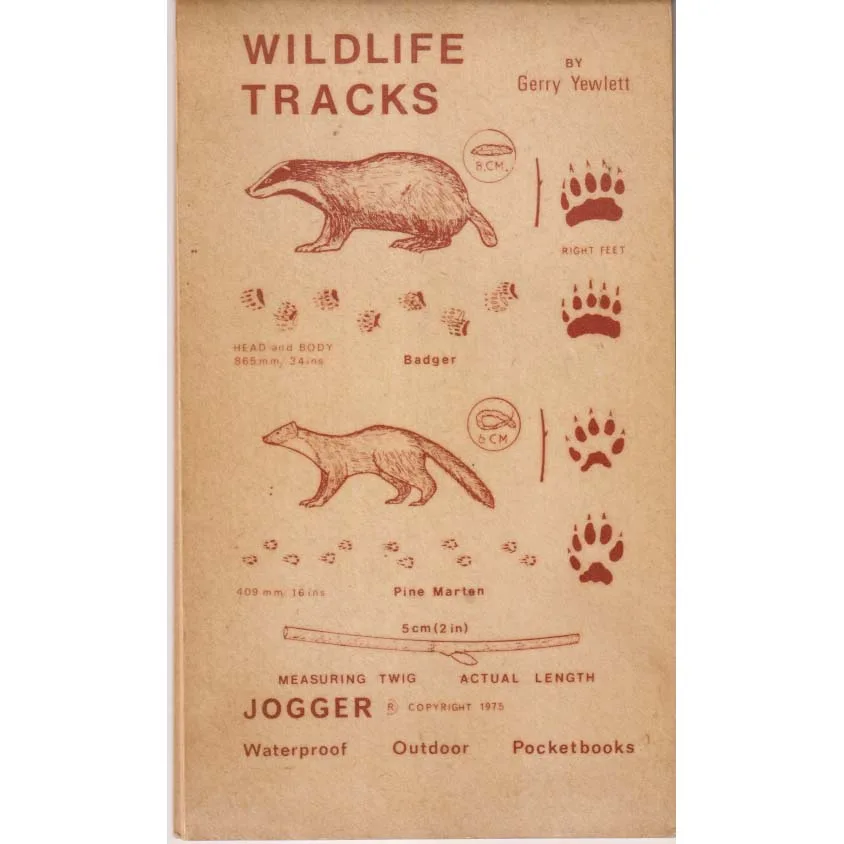
Publisher: Jogger
Format: Paperback
ISBN: none
Here’s a long, quirky Crappy Old Books version with the waterproof pocket-guide angle pushed nicely:
Wildlife Tracks (1974) by Gerry Yewlett – Jogger
There are two types of people in the countryside.
Those who see a muddy footprint and think, “Something walked through there.”
And those who crouch down, peer at it suspiciously and announce, “Fox. Probably last night. Heading north.”
Wildlife Tracks by Gerry Yewlett, published in 1974, is for the second sort.
This wonderfully compact little guide is designed to help identify the tracks and signs left behind by wildlife, turning mysterious marks in mud, sand and soft ground into clues about what has recently wandered past while you were looking in completely the wrong direction.
At just 20 pages, this is not a vast natural-history encyclopaedia intended to occupy half a shelf and require reinforced furniture. It is a small, practical field guide — the sort of thing you can actually take outside, put in a pocket and use when confronted by an assortment of footprints that could belong to a fox, badger, rabbit, deer or particularly determined domestic cat.
Even better, it is waterproof.
This is an unusually sensible feature for a book about identifying animal tracks, because animal tracks have an irritating tendency to occur outdoors, where Britain traditionally provides mud, drizzle, wet grass, puddles and horizontal rain in quantities apparently designed specifically to destroy paper.
So while ordinary books prefer libraries, desks and centrally heated rooms, Wildlife Tracks is prepared to accompany you into the damp.
The guide offers an accessible introduction to recognising different wildlife tracks and provides a handy reference for walkers, naturalists, campers, ramblers, children, teachers and anyone who enjoys discovering that the countryside is considerably busier than it first appears.
Tracks are one of the great bits of natural detective work. The animal itself may be nowhere to be seen, but it has helpfully left behind evidence.
A few marks in soft earth can reveal what passed through, how large it was, which direction it travelled and occasionally whether it was walking, running or apparently conducting urgent wildlife business.
Published in 1974, the booklet also has that pleasingly practical character common to vintage outdoor guides. There are no apps, QR codes, GPS coordinates or requests to create an account before viewing a badger footprint.
You simply look at the mark on the ground and then look at the book.
A revolutionary system.
Because it is so small, it is also ideal for keeping in a coat pocket, backpack, glove compartment, caravan, tent or the drawer containing all those useful outdoor things that you know you own but can never locate when required.
This copy is in Good condition, which is particularly impressive for something specifically designed to be carried around outdoors for more than fifty years.
Its waterproof construction has presumably helped it avoid the usual fate of field guides, which is to become a swollen papier-mâché object after somebody leaves a rucksack open during a sudden shower.
Ideal for wildlife enthusiasts, walkers, vintage nature-book collectors, scout leaders, countryside explorers or anyone who has ever found a footprint in the mud and wanted to know what made it.
Also useful for determining whether the mysterious tracks around the compost heap belong to local wildlife or merely the neighbour’s cat returning to commit further offences.
Sold by Crappy Old Books, where we encourage responsible wildlife observation and strongly recommend identifying tracks before following them into anything described locally as “a bit boggy”.
ISBN: None
Condition: Good
Keep browsing: See more Animals books Other books by Gerry Yewlett
